Swati Homesteads Done Right

Pankaj Singh
| 13-08-2026
 · Travel Team
Traditional Swati huts are best understood as part of a homestead, not as isolated photo subjects.
For Lykkers traveling between Mbabane and Manzini, the strongest plan is to stay in the Ezulwini Valley and visit two established places: Mantenga Cultural Village for a structured introduction and Mlilwane Wildlife Sanctuary for a broader rural setting.
Two full days and three nights are enough. For a comfortable trip, budget roughly 4,000 to 7,500 South African rand per person, excluding international transport, depending mainly on accommodation and whether you hire a private driver.
Mantenga Nature Reserve and Cultural Village
Base Yourself in Ezulwini
Do not divide your nights between Mbabane and Manzini simply because both appear on the map. Ezulwini sits conveniently between them and reduces daily driving while keeping cultural attractions close.
Choose May through September
The cooler, drier months are easiest for outdoor exploration. Daytime conditions are generally comfortable, although mornings and evenings can become surprisingly cool. Pack a warm layer and closed walking shoes.
October through April is warmer and wetter. The countryside becomes greener, but afternoon showers can interrupt outdoor plans. If traveling then, schedule Mantenga or longer walks before midday.
Three nights work well: arrival evening, Mantenga on day one, Mlilwane on day two, then departure. Adding Mbabane or Manzini requires only a few extra hours rather than another full sightseeing day.
Stay in Ezulwini and budget carefully
Accommodation ranges considerably. Simple guesthouses may start around 700 to 1,000 rand per room nightly, while comfortable lodges and hotels commonly fall around 1,200 to 2,500 rand. Higher-end properties can exceed this range during busy dates.
For three nights, a couple sharing a mid-range room should therefore reserve approximately 3,600 to 7,500 rand for accommodation excluding meals.
King Mswati III International Airport is roughly 70 km from Ezulwini. Allow approximately 60 to 75 minutes by road. A prearranged private transfer may cost roughly 800 to 1,500 rand per vehicle depending on operator and pickup conditions. Confirm the quotation before flying because airport transport prices are not uniform.
Eswatini uses the lilangeni, which is pegged one-to-one with the South African rand. South African rand notes are widely accepted, making them practical for visitors. Change may be returned in local currency.
Decide between driving and hiring a driver
Renting a vehicle is efficient if you are comfortable driving on the left. Main routes connecting Mbabane, Ezulwini, Manzini, and Malkerns are manageable, although rural access roads deserve more caution.
A private driver costs more but removes navigation and parking concerns. For a cultural sightseeing day, request a fixed half-day or full-day price rather than paying for individual journeys. Roughly 800 to 1,500 rand is a reasonable planning allowance for private transport, but actual quotations vary by distance and waiting time.
Budget another 200 to 400 rand per person daily for straightforward meals, drinks, and small purchases.
Choose Two Meaningful Stops
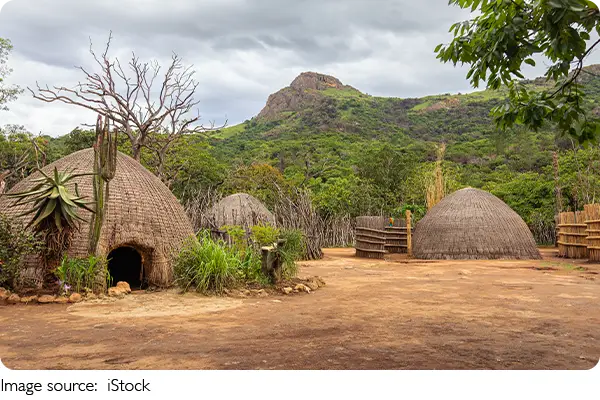
Trying to drive through random villages looking for traditional huts is neither efficient nor respectful. Mantenga explains the architecture clearly, while Mlilwane adds landscape and a slower rural experience.
Spend two to three hours at Mantenga
Leave Ezulwini around 09:00. Mantenga Cultural Village is generally only about 10 to 15 minutes away by vehicle, making it the easiest introduction to traditional Swati homestead design.
The reconstructed settlement shows how traditional structures relate to one another within a complete compound. This matters because the rounded huts make much more sense when you understand their different roles and spatial arrangement.
Mantenga Nature Reserve generally opens during daytime hours, commonly around 08:00 to 17:00. Entrance prices and performance arrangements can change, so confirm the current rate directly before visiting. Keep approximately 150 to 250 rand per person available as a practical admission allowance rather than relying on an outdated exact figure.
Allow two to three hours, particularly if your visit coincides with a scheduled cultural performance. Confirm performance times the day before and arrive at least 20 minutes early.
Give Mlilwane half a day
On day two, leave Ezulwini around 08:30 for Mlilwane Wildlife Sanctuary in the Malkerns Valley. The journey usually takes approximately 30 to 45 minutes.
Reserve four to five hours. Entrance and activity fees vary, so allow roughly 150 to 300 rand per person for basic access and keep additional money available if booking guided activities.
Mlilwane is worthwhile when you want more than architecture. The sanctuary combines rural scenery, wildlife, walking opportunities, and accommodation, making it a natural second step after Mantenga's concentrated cultural interpretation.
Carry at least one litre of water per person and complete longer outdoor walks before midday during warmer months. If you stay overnight at Mlilwane, you can reduce driving and experience the valley at a slower pace.
Know when not to photograph
Private Swati homesteads remain living family spaces. Do not enter compounds, gardens, or side roads simply because a traditional structure looks interesting. Ask before photographing residents or making an individual the focus of an image.
The same rule makes guided community visits more valuable than random exploration: you know where visitors are welcome and what you are actually seeing.
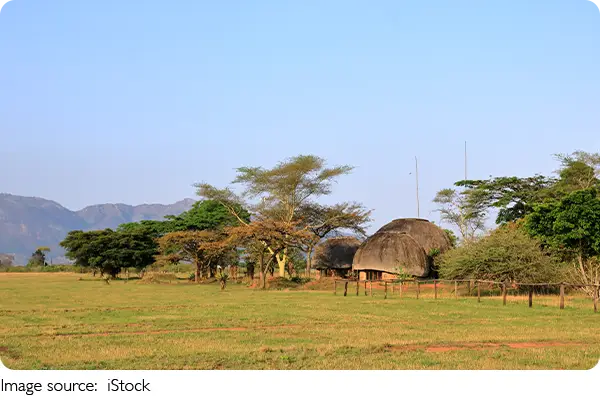
For three nights and two full days, approximately 4,000 to 7,500 rand per person is a sensible, comfortable budget, excluding flights and assuming shared accommodation costs. Stay in Ezulwini, spend two to three hours at Mantenga, then reserve half a day for Mlilwane. That route gives Lykkers the architecture, cultural explanation, and rural setting while avoiding unnecessary driving and intrusive visits to private villages.